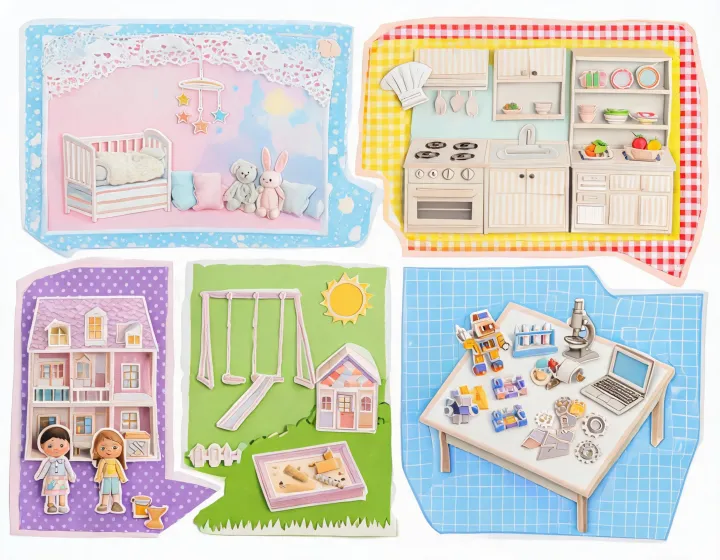
Tabbed play regions
Find the setting before choosing the toy
The same product category can serve very different needs. A dollhouse may become a calm after-school story world, while a play kitchen may support language, turn-taking, and daily routine mimicry. Outdoor equipment may be about movement and confidence. Educational toys can support counting, sorting, or problem solving without turning playtime into a lesson. These tabs help shoppers begin with the child and the moment.
Newborn and baby-shower gifting
Choose gentle items that help the giver feel thoughtful without overwhelming the family. The best match has a clear age note, a simple setup, and a reason the product can wait safely until the child is ready.
Toddler movement and routine
Look for sturdy pretend pieces, low steps, and tactile details that support repeated actions such as opening, sorting, carrying, and naming.
Preschool role-play and storytelling
Play kitchens and dollhouses work well here because children can assign roles, repeat family routines, and add new characters without needing a screen.
Outdoor confidence and active days
Backyard playsets and inflatables should fit the available area, supervision style, and the child's current comfort with climbing, sliding, and group play.