First invitation
Clear roles, friendly scale, and easy first actions help children begin without waiting for instructions.
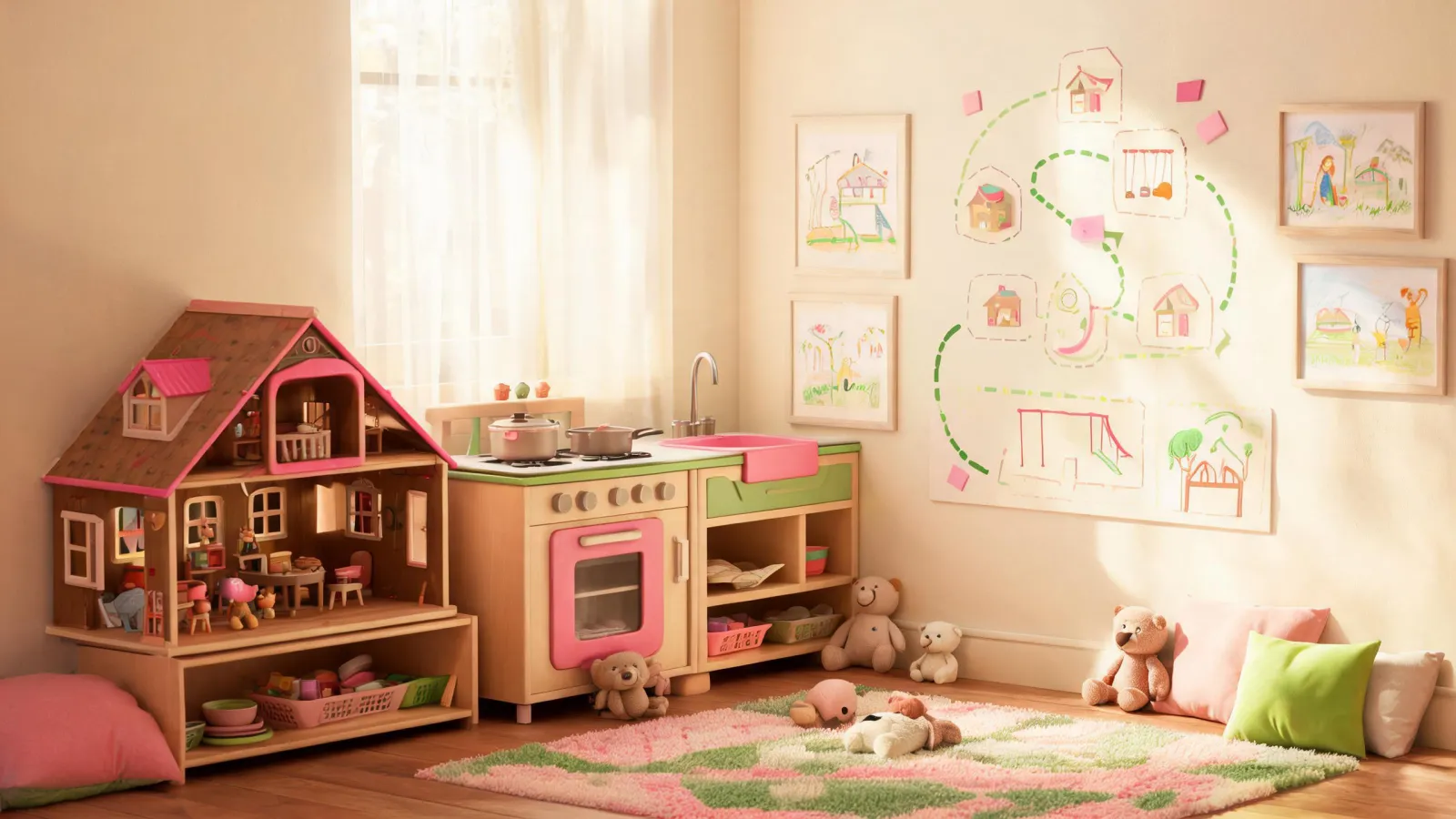
Our point of view is simple: a toy should open a scene, invite a role, and make it easy for children to come back tomorrow with a new idea.
Kidkraft looks at play as a sequence of small discoveries. A toddler may begin by opening a pretend oven door, naming colors, and moving cups from shelf to shelf. A preschooler may turn the same kitchen into a cafe, then a grocery counter, then a family dinner. An older child may use a dollhouse to plan room layouts, write character names, or host a story that changes each weekend. Our roadmap keeps that progression visible so product choices are not only attractive on a screen, but also useful in everyday family life.
Clear roles, friendly scale, and easy first actions help children begin without waiting for instructions.
Accessories, rooms, and pretend tasks make it natural to return to the same setup with a fresh story.
Products are designed for siblings, grandparents, and friends to join the game without taking it over.
We keep age-grading and small-part awareness close to the product conversation, because trust begins before the toy arrives.
Families need play kitchens, dollhouses, and outdoor pieces that work in shared spaces, corners, and busy homes.
Kidkraft products avoid one-note use cases by giving children settings they can reinterpret again and again.
We make it easier to compare themes, footprints, and occasions before asking a family to commit.
Parents, gift buyers, educators, and retail teams notice different parts of a product. Kidkraft listens across those groups, then turns the combined feedback into clearer category pages, safer setup cues, and play ideas that do not require elaborate preparation.
We can help translate age, room size, and favorite themes into a product direction that feels joyful and manageable.